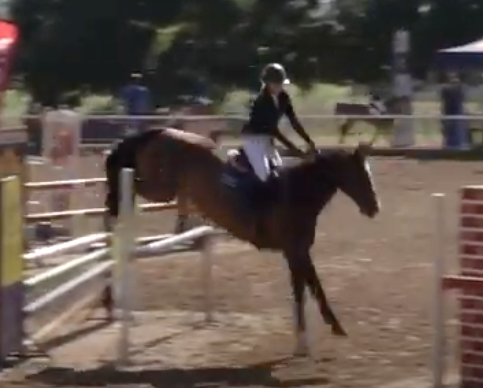
Class 2, Sophie Rambo
by Michael Wrightpublished on 24/11/2023
Capital Cecilia

Up Next
Related Videos
Welfare of our Racehorses
3 years ago
Welfare Guidelines for horseracing.
Assistance with the therapeutic treatment of horses
The racehorse is a hard-working athlete which will experience health complications and conditions of injury during its racing life. As the welfare of the horse is important the NHA has a responsibility to assist with therapeutic drug substance administration guidance (in providing therapeutic substance detection times - in order to assist with therapeutic substance treatment regimens). The NHA must however ensure that the welfare of the horse is maintained in that substances which affect the horse are not present at therapeutic levels on race day as these can influence race performance and / or mask injury and pain.
International and Asian Screening Limits for therapeutic substances
It is important not to prosecute therapeutic substances, which are legitimately used in equine medicine, at low levels where these do not affect the horse. International and Asian Screening Limits (ISL’s and ASL’s) for therapeutic substances provide such guidance. These screening limits are concentration values which are internationally decided. Below these limits (concentrations) there is no therapeutic effect and therefore a positive finding is not declared. Compliance of the NHA to these is important to ensure that a sensible, internationally approved standard is applied.
Substances which have the possibility to be present in residue levels in equine feed (known as feed contaminants) are also considered. International residue limits (IRL’s) are adopted by the NHA to prosecute findings of such substances when these exceed background levels and are indicative of exogenous administration. The ISL’s, ASL’s and IRL’s which are adopted by the NHA are provided on the NHA website.
The NHA and IFHA websites provide a list of Detection Times for therapeutic substances. While the screening limits provide Laboratories with an action level for positive findings, a “detection time” is the time period following administration during which the screening limit is still exceeded. A withdrawal time which is a suitably a longer period of time is advised (e.g. more than 2 days longer), at the discretion of the advising veterinarian. This guidance is provided on the NHA website.
This weekend the L’Ormarins King’s Plate will be held for the first time at Kenilworth Racecourse in Cape Town, South Africa. It would have been the 162 running of the Queens Plate, changed for obvious reasons.
The historic race was first held in 1861 as the Queen’s Plate, in honour of Queen Victoria, before being run as the King’s Plate from 1902 to 1952.
With the ascension of King Charles III, the race has reverted to the King’s Plate.
Dual, LQP winner Jet Dark will be lining up once again for trainer Justin Snaith and patrons Nick Jonsson and Tommy Crowe.
The imposing bay arrives in fine form, having won his prep race after a short break.
However, he faces a strong field including potential superstar, the unbeaten three-year-old Charles Dickens for trainer Candice Bass-Robinson at Bass Racing Stables and Drakenstein Stud
Featured
Be the first to comment “Class 2, Sophie Rambo” Cancel reply
You must be logged in to post a comment.


There are no comments yet.